Vedic Meditation is a simple and natural technique. It is designed to reduce stress, quieten the mind and bring greater calm, clarity, and balance into your life.
Using a personalised silent mantra, your mind moves beyond thoughts and stress to a relaxed state of inner quietness.
At the same time, the body experiences deep rest, helping to release accumulated stress and fatigue.
There is no concentration or contemplation, just sitting comfortably in a chair with your eyes closed and effortlessly using your mantra.
Practised for 20 minutes twice daily, it becomes an easy and effective practice that anyone can do, even if you have a busy mind.
About Vedic Meditation
Benefits
Some of the benefits experienced by practitioners include:
Reduced stress & anxiety
Improved rest
Greater clarity & focus
Increased energy
Emotional resilience
Better relationships
Greater adaptability
Increased self-awareness
Connect with your inner self
To find out more, watch this feature story on ABC | Compass:
FAQ’S
-
Yes. Having thoughts is no barrier to successful meditation; they are considered a central part of the Vedic practice. If you can think, you can meditate. Thoughts pose no problem at all.
-
No. Vedic Meditation is a simple mental technique to increase relaxation and well-being that is practised by people from all cultural and religious backgrounds. It does not involve adopting new beliefs or wearing particular clothing.
-
No. You sit comfortably in a chair with your back supported and your eyes closed. No yoga positions or chanting are involved in this simple twice-daily 20-minute practice.
-
You can meditate almost anywhere that you can sit safely and comfortably. You don’t need a special room or silent surroundings. You can meditate in a park, in your office, on a bus, train or plane, or in your parked car.
-
Yes. Vedic Meditation is different. It does not involve concentration on the breath or an object, or contemplation of specific ideas. It involves the effortless repetition of a mantra or sound that allows the mind to settle and transcend thinking. It is a simple, natural technique practised without effort.
-
No. You don’t need any prior meditation experience to learn Vedic Meditation. You will learn everything you need to successfully meditate in the 4-Day Learn to Meditate course.
-
Maharishi Mahesh Yogi was a revered spiritual teacher from the Shankaracharya lineage of the Vedic tradition.
Caroline Fisher teaches Vedic Meditation and was trained to teach this form of meditation by Thom Knoles. Thom was trained as a teacher of Transcendental Meditation (“TM”) by Maharishi Mahesh Yogi (“Maharishi”), and taught it for over 25 years with organizations affiliated with Maharishi. Since 1997, Thom has continued to teach this meditation as he learned it from Maharishi, and has done so independently and separately from the TM organizations, using the terms “Vedic Meditation". Thom Knoles trained Caroline Fisher to teach meditation as Thom was trained to teach meditation by Maharishi. Caroline Fisher teaches Vedic Meditation independently and separately from TM organizations, and is not affiliated with those organizations.
-
No. Learning to meditate is not a replacement for medical care for your mental or physical health. If you want to learn to meditate, speak to your medical practitioner about it first. You must not stop any prescribed treatments without the consent of your medical practitioner.
Where does Vedic Meditation come from
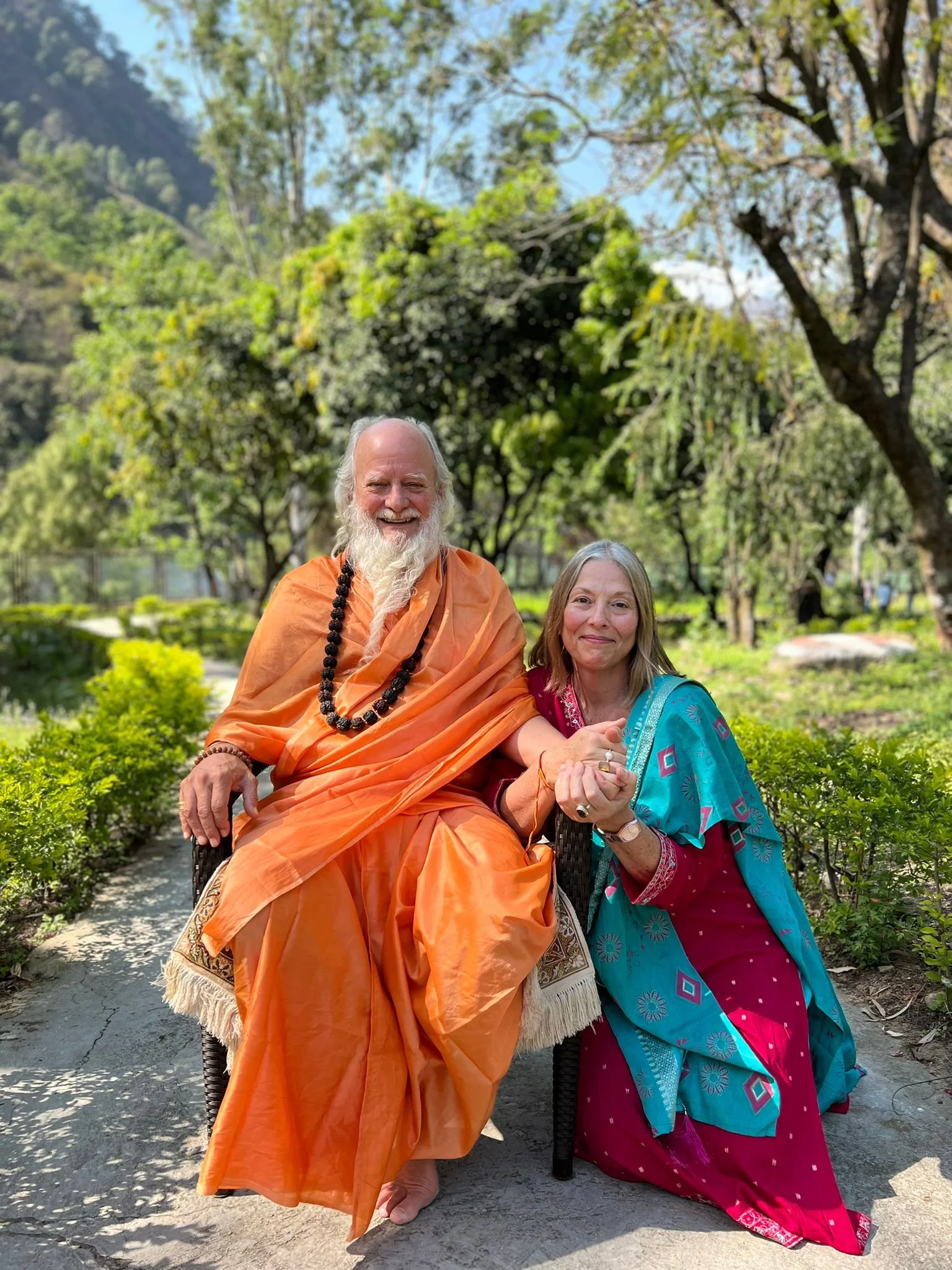
This simple practice originated from the Vedic tradition of India and is derived from an ancient body of knowledge called the Veda. The philosophy of the Veda is about living in alignment with the laws of nature.
The oral tradition has been maintained through an unbroken lineage of teachers via rigorous teacher training and the direct, in‑person passing on of the technique. Caroline was trained by Thom Knoles, who in 2025 was inducted as Mahamandaleshwar, a pre-eminent master of Vedic knowledge in the Shankaracharya tradition. In India, he is known by his honorific title, Shri 1008 Mahamandaleshwar Maharishi Vyasanand Giri Maharaj. He was taught by his master, Maharishi Mahesh Yogi, who was a disciple of Swami Brahmananda Saraswati.